“I am circling around God, around the ancient tower, and I have been circling for a thousand years, and I still don’t know if I am a falcon, or a storm, or a great song.”
― Rainer Maria Rilke, The Book of Hours
If ever there was a time when we needed a hopeful sign from the Universe that in the end the darkness shall pass and everything will be all right, it is now. While the world suffers in the darkness and consequences of a raging pandemic, the war in Ukraine, the wars between us…this winter came down harder than usual.
In 2019, when the roof of Notre Dame burned, dark thoughts invaded – that this is a metaphor for the beginning of the end of Western Civilization as we have known it.
Less than a year later the Covid-19 virus invaded our lives and 2020 became a hell-hole of disease, death and a complete lack of viable, intelligent leadership in the United States. We became the epicenter of the pandemic. We locked down, our economy crashed…and still the virus raged.
It’s been a rough two years, in the scope of my life…though the virus infected me-mildly- I am vaxed to the max. Still Covid remains oppressive and constant, like the sky has lost its altitude and bears down on me like a permanent winter.
The 2021 Winter Solstice brought a beacon of hope, a sign from the Universe, as we learned that Jupiter and Saturn were almost touching on the longest, darkest night of the year.
They called it the “Bethlehem Star” and the “Christmas Star” after the Christian belief of the birth of Jesus, and the celebration of the return of the light to the world as Christmas.
Astronomers told us all that the “Christmas Star” will result in these two planets coming to within a tenth of one degree of each other. In full view for all of life on Earth to see.
So what does it mean, THIS “Christmas Star”? A goodly number of our Christmas Carols and cards concern a Star heralding the birth of a baby who comes to save the world from darkness.
“For Catholic Christians, the promise of the baby is the light piercing the darkness. But all belief systems look for light in the bleakness of winter. It is our shared and very human condition to seek enlightenment metaphorically, through a candle, a fire, or a string of icicle lights.”
—Inez Russell Gomez
Or a Star…
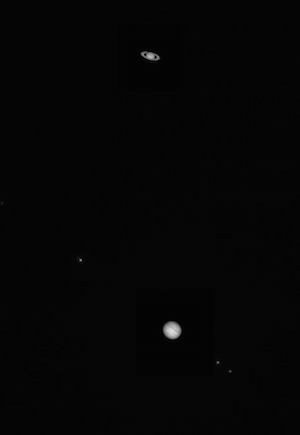
Metaphorically speaking…because how close these two planets were, really? From Earth without binoculars, a person could see a space between them. A telescope shows moons of Jupiter…so they weren’t like side by side or almost touching; they just LOOKED this way to us.
The photograph recreates the illusion; it’s really doesn’t show how close Jupiter and Saturn really were–it’s just how close they looked to us from Earth. Astronomers said the two planets were around 1/10th of a degree apart.
Enquiring minds wanted to know just how close they were. A tenth of a degree is a unit on the circumference of a circle of any size, so what does 1/10th of a degree mean to when we gaze at two planets that seem so close together?
Saturn’s orbit is around one billion miles from Earth’s orbit. One tenth of a degree on a circle with a radius of one billion miles gives an arc distance (how far apart Saturn and Jupiter look to us from Earth) in miles–which is, after doing the math, 3.6 miles. THAT is close to the proverbial gnat’s ass–more than a quarter million miles apart. “Close” only if you consider Saturn is a billion miles from us.
In any event or degree, the orbits of Saturn and Jupiter are really distant from each other. Never are these two planets actually very close together; even at their closest conjunction as happened on the 2020 Winter Solstice, they were still 450 million miles (730 million kilometers) apart.
…but who cares?
A big fat star created by the illusion of two planets a billion miles away, and 450,000,000 miles apart appeared in the darkest winter sky in the hour of our greatest need…and we all looked up to it daring to hope. Not caring that the distance between them is near incomprehensible.
Because analyzing the distance of a 1/10 of a degree of an arc on a circle with a one billion mile radius would never cause the entire planet to pause a moment and take a collective breath.
Jupiter-Saturn Conjunction
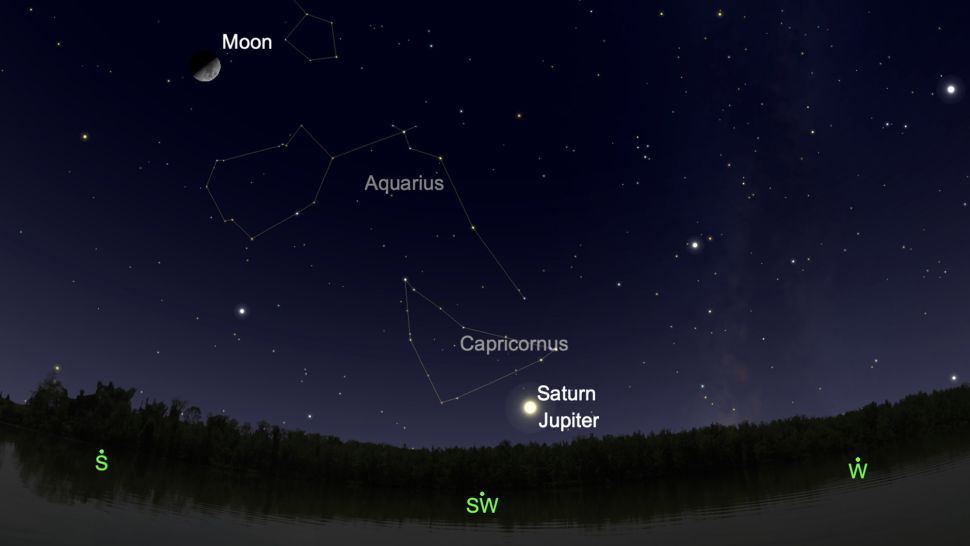
Perhaps the better question is: Why do we care? It’s an illusion, these two planets that from our point of view on Earth are close enough to almost touch. On the Winter Solstice, the longest night of the Year. The darkest year most of us have ever known. Because a big bright star that appears in the night sky on the longest night of the year is a metaphor.
Metaphors may point to scientific facts, but aren’t scientific facts themselves.
Metaphors such as the Star are guiding lights on our life and soul’s journey through the darkness, through the not knowing, through the fear and dread of a pandemic. Of death.
Pretty much all religions and spiritual paths rely on metaphors to explain the journey and the way to get “there”…however obtuse or obvious the metaphor is.
The Virgin Birth for instance <heresy alert> is a metaphor. Not a biologically impossible fact that people are asked to embrace as one, while overlooking the enormous miracle that our world exists at all.
Humans invented metaphorical devices such as religions, all of them, as well as the esoterica of the Tarot, Astrology and others to try and explain and help guide us, as spiritual beings, through a journey that probably has no end. While generally completely un-scientific, metaphors have their proper place as one way of knowing.
Metaphors open the gates between the ways of knowing, as a means to understand, for instance, the depths of what this Star means. Not to fortune tell, but to contemplate the ways of the Universe, the ways of our souls on Earth. For me, these are contemplative tools – pathways to the inner ways of being that we (I) perceive to be the rhythms of the Universe itself. Or God, if one chooses that term over another…all the same to me.
Astrologers say that Jupiter and Saturn conjunctions occur about every 20 years and signify Change.
The old forms are dying (Saturn), while great fertility and new beginnings are on the rise (Jupiter). The conjunction signifies a time of combining structure, patience and wisdom (Saturn), with expansive, imaginative vision (Jupiter).
That this conjunction is the first to happen in the constellation Aquarius–may we dare Hope that the long heralded Age of Peace and Understanding is finally at hand? That we’ve overcome racism and greed? Or in our more personal, daily lives, may we hope the Covid-19 pandemic will wane? Click here for more…
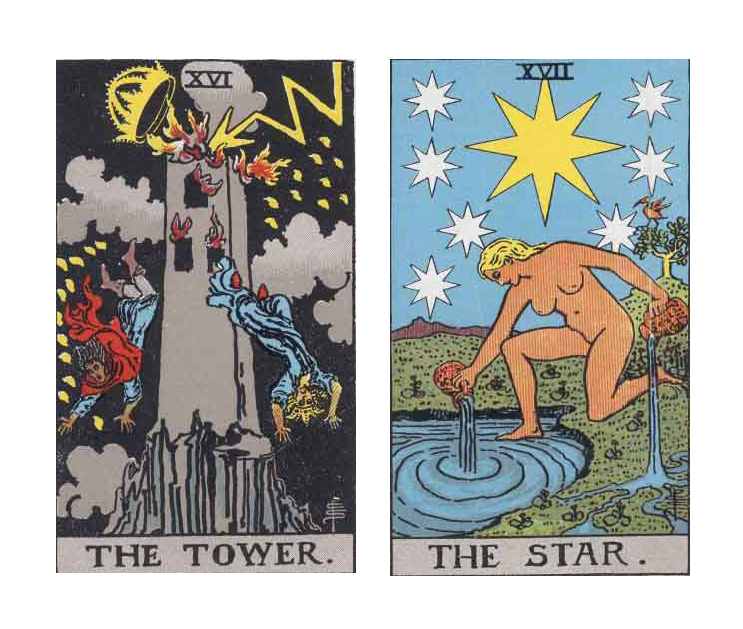
I remember when the roof of the Notre Dame Cathedral burned in 2019, and in that horror, I saw The Tower Card of the Tarot.
I said out loud: “This is the beginning of the end of Western Civilization as we have known it.”
Perhaps a little hyperbole, but the sense of destruction of all the strong, formidable structures we in the USA and the rest of the privileged world began, for me, when the Notre Dame burned.
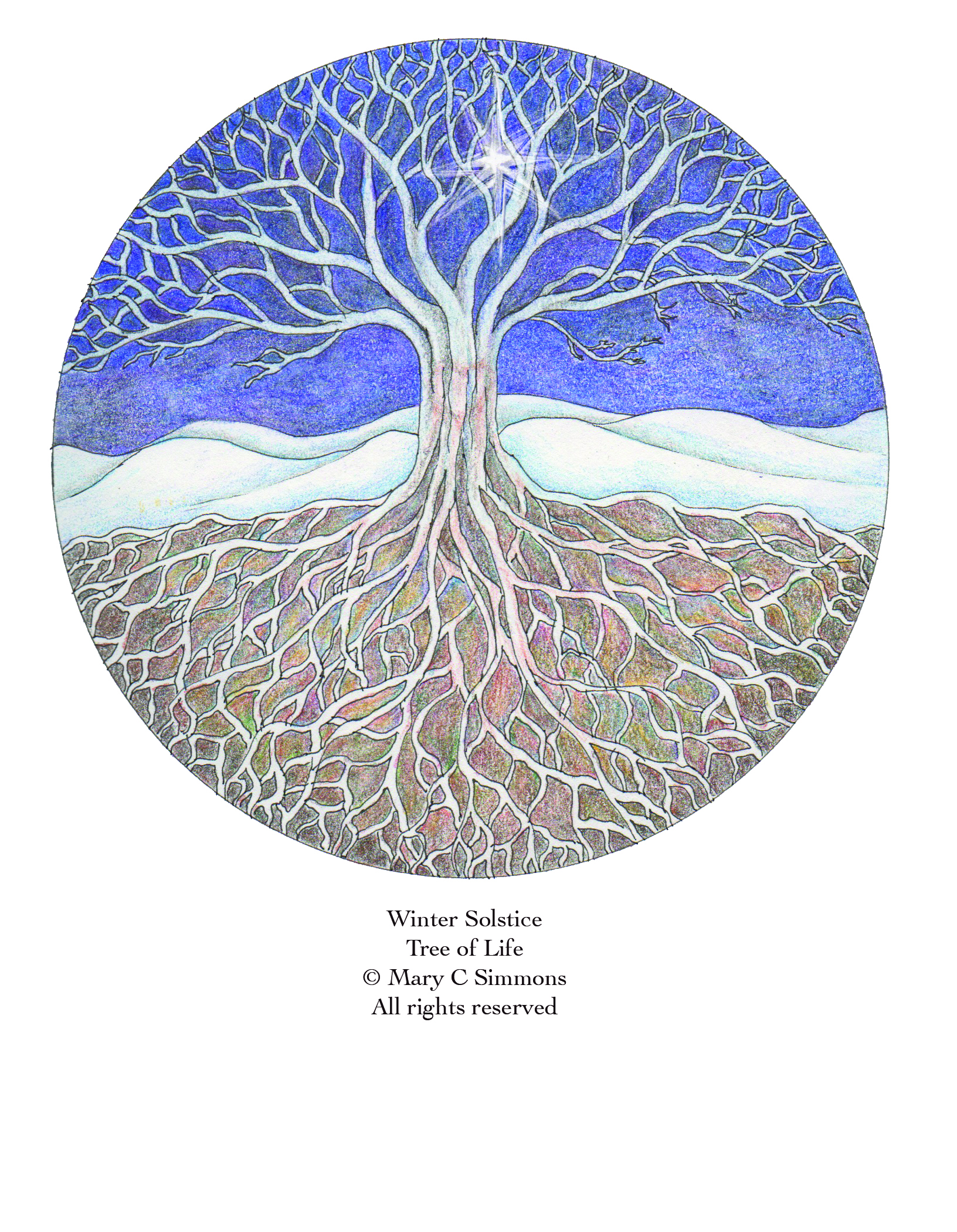
The Winter Solstice
Darkest night of the year, darkest night of the darkest year of our lives – this Winter Solstice was the night Saturn and Jupiter were the closest they have ever appeared to us on Earth since the 13th century.
The entire world it seemed, took a deep breath. Somehow feeling it was a sign of better days to come…the return of the Light. The relief from this dark madness.
We do not know what the future will bring, whether we’ll all get sick and die, whether life in any recognizable form will go on. But, the metaphor of the Star came at the most opportune time: with a promise and reminder that life is a continuous cycle of death and rebirth, which is the concert of the Universe.
Indeed, the birth of Jesus the Star Child Savior is the metaphor for the same thing.
That’s what some metaphors do. Give us hope.
Hope, whose radius is indeterminate… and whose center is everywhere.
May the promise of The Star lead us all back into the Light.
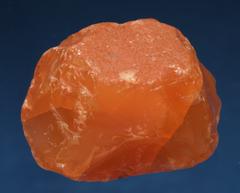 In the first place, Carnelian is composed of chalcedony a microcrystalline form of quartz, wherein the individual crystals are tiny—microcrystalline, they call it. Too small to see without a Petrographic Microscope.
Carnelian colors range from pinkish through blood-red to tan, all of which come from traces of iron oxides for the reds, and hydrous iron oxides for the tan colors—often called ‘sard’.
Carnelian is considered an agate—though not usually banded as most agates are. But its translucency keeps it in the agate family, rather than the opaque nature of jasper which is also composed of chalcedony.
Mined worldwide, Carnelian originates in volcanic rocks, in quartz-saturated fluids flow and fill fissures and holes left by exsolved gas bubbles. Because of its iron content, Carnelian tends to occur in the more iron-rich basaltic lavas.
This is all quite fascinating to geology folk such as I, but I reckon others are more interested in the historical love affair we humans have had with Carnelian since the morning of our history.
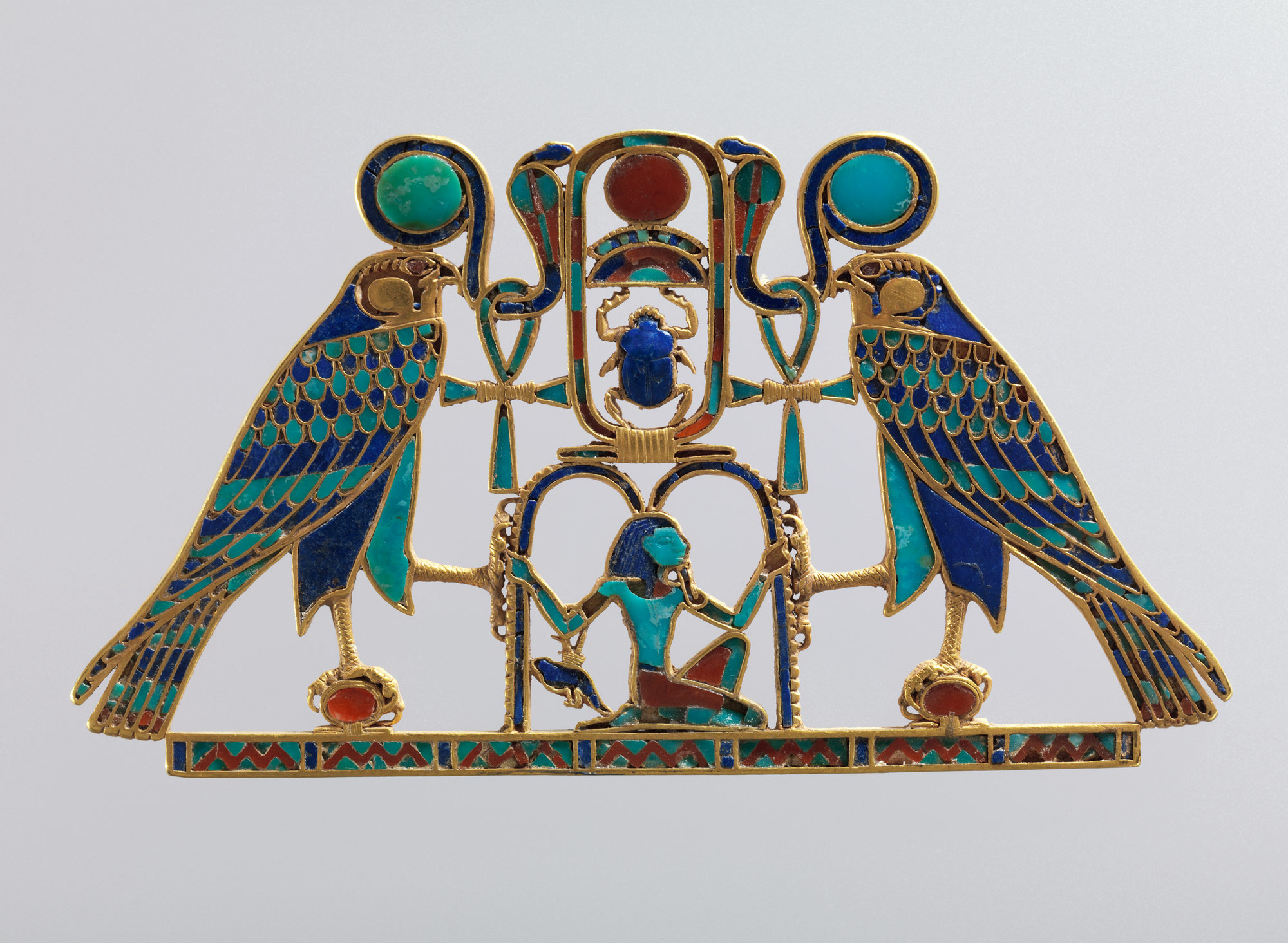
The ancient Egyptians made beautiful use of Carnelian in jewelry.
Carnelian was associated with blood and often given as a remedy for blood diseases, or to invigorate the blood. Some associated Carnelian with strength, vigor and courage, no doubt again referring to its blood-like color.
To the masses, Carnelian was also associated with good luck — for is it not anything but luck that one’s blood is ‘royal’? And to be royal is to have enough food, and shelter, clothing. Are we not all royal? — all human blood is red.
All over the ancient world, Carnelian ruled. That certainly suggests it was relatively common. As common as our blood.
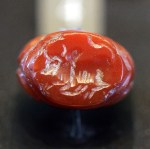
Caption:Carnelian Bull seal AO7121-2,
3rd century CE, Sassanid Era
Photo by Rama.
References:
https://www.mindat.org/min-960.html
https://rocktumbler.com/blog/what-is-agate-jasper-chalcedony/
https://www.gemsociety.org/article/history-legend-carnelian-gems-yore/
http://www.geo.utexas.edu/courses/347k/redesign/Gem_Notes/Quartz/quartz_triple.htm

 Mary C Simmons

You must be logged in to post a comment.