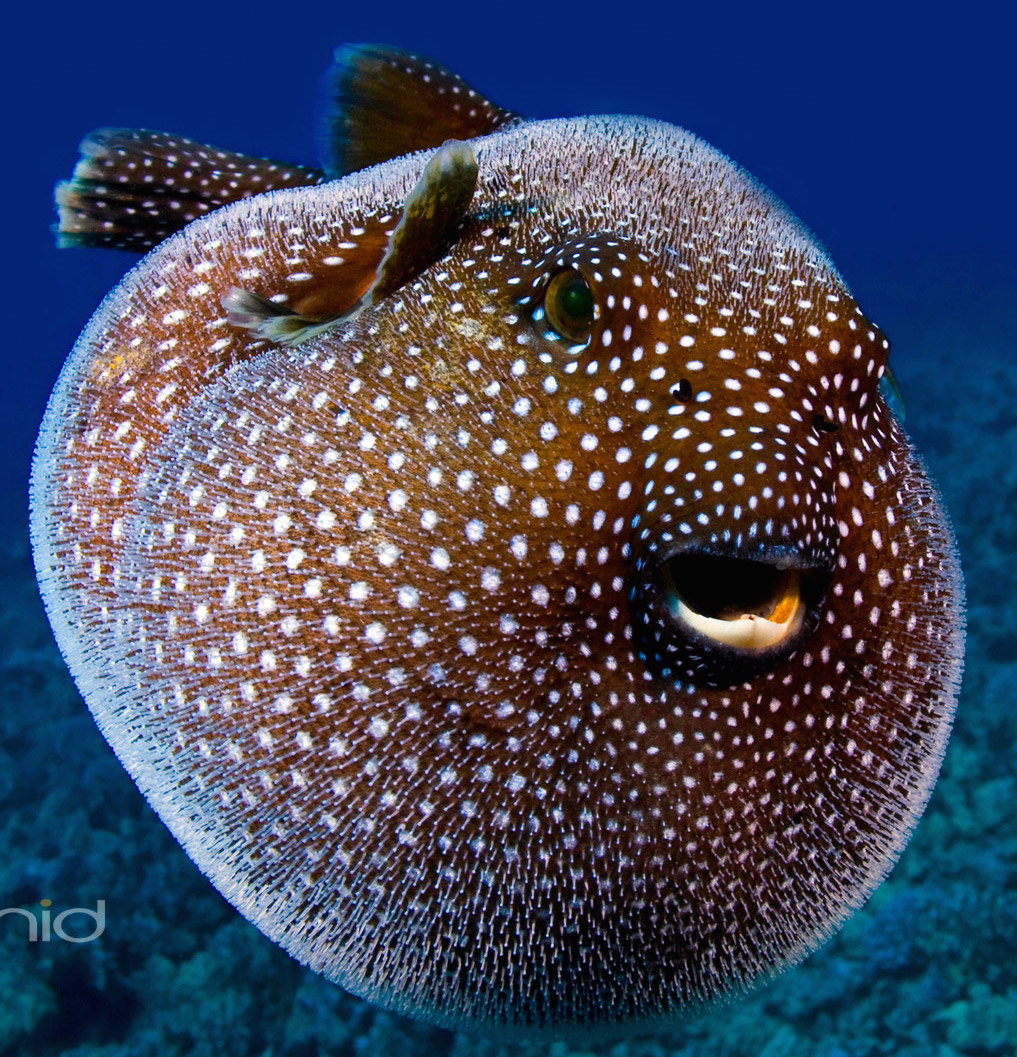
A recent blog post, And then it was Art, featured a delightful video of a pufferfish creating a work of art in the sand, as if he could somehow visualize what the final piece would look like. That’s what artists do—we create a physical manifestation from an internal vision. Who knew a little fish could do that too? Surely it is not a sign of high intelligence and sentience as in humans, but merely an instinctive mating ritual in the pufferfish.
Heretofore, I’ve been guilty of a quite bigoted attitude, you might even say species-ist, against pufferfish everywhere. I have in a most unaware manner, equated art with superior intelligence and sentience, and discounted the very idea that this tiny fish could be either. For most of my life I have bought into that dogma.
Until the pufferfish came into my life.
What if the pufferfish is actually highly intelligent as well as aware?—but how would we know? When the standard of intelligence is set by us, and has everything to do with our anatomy?
So what is sentience, exactly?
Well, the definition evolves over time, but has nothing to do with intelligence…
And:
1. the state or quality of being sentient; awareness
2. sense perception not involving intelligence or mental perception; feeling
Just because we can’t hear it scream…
EcoArt
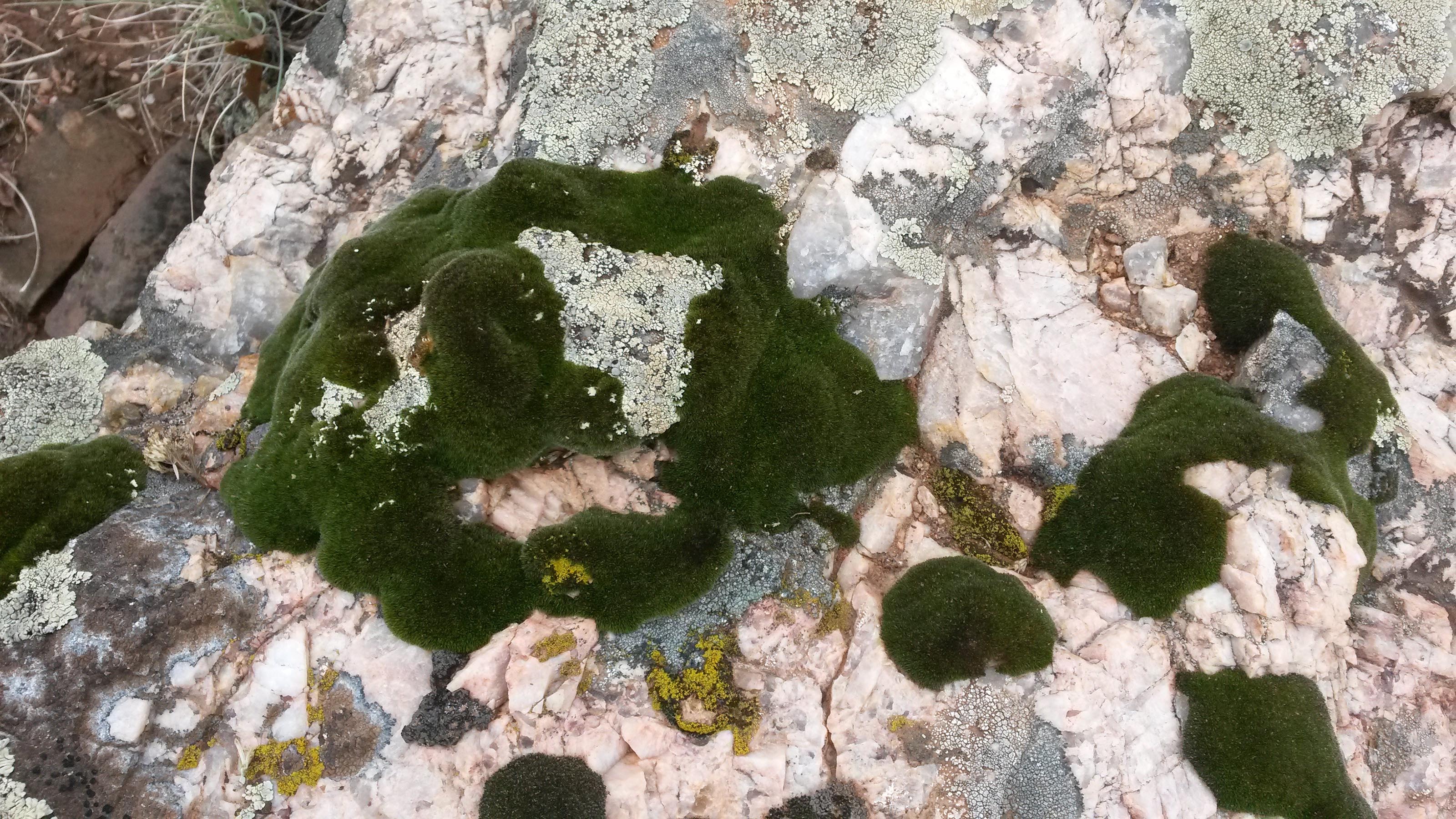
If you take a closer look, past or within the velvety green luscious amazing moss, there’s a few other creatures in the rocks. As it turns out….moss is an allotrope, meaning it’s a primary plant producer upon which the food supply of the entire animal world depends. Contrary to popular belief, moss does not eat rocks, it attaches to them in order to get water; it’s energy is derived from the sun, as is true of all plants.

The Little Pufferfish Who Could
…build her a castle
Art in the Sand

Who knew pufferfish are masters of art and architecture?
Or are they merely evoking a mating ritual, in which the sole purpose of the pufferfish’s activity is to impress a female?
Mission Accomplished
On either count. I am impressed. Thoroughly and completely.
I feel a certain kinship to this pufferfish, who pulls his vision from the sand. I work in clay—rarely if not never do I sketch things out first on paper. It’s not that I cannot draw, it’s that paper is but two dimensional, and clay is three. For me, it’s just easier to ‘draw,’ so to speak, with the clay in the first place.

The pufferfish didn’t draw it all out first either, for obvious reasons. No paper, no writing utensils, no thumbs…just an internal vision that drove his entire body in the performance of art. That’s how I do it too, engrossed in my task and operating from an internal vision that informs my hands to construct the compendium of details that comprise the whole.
Art and Sentience
We humans draw a firm boundary between ourselves and the rest of creation, based on a standard (set by us) of intelligence and sentience, which undergoes periodic redefinition to exclude all of creation except us. Originally defined as the ability to feel and perceive, the definition was expanded to include an ability to suffer. Once we started noticing that all animals have that ability, self-awareness became the defining quality of sentience.
I can’t imagine how the pufferfish created his art without an awareness of himself in his oceanic landscape of water and sand. Why is it that the creation of art is an instinctual mating ritual in the animals, but a sign of sentience and intelligence in us?
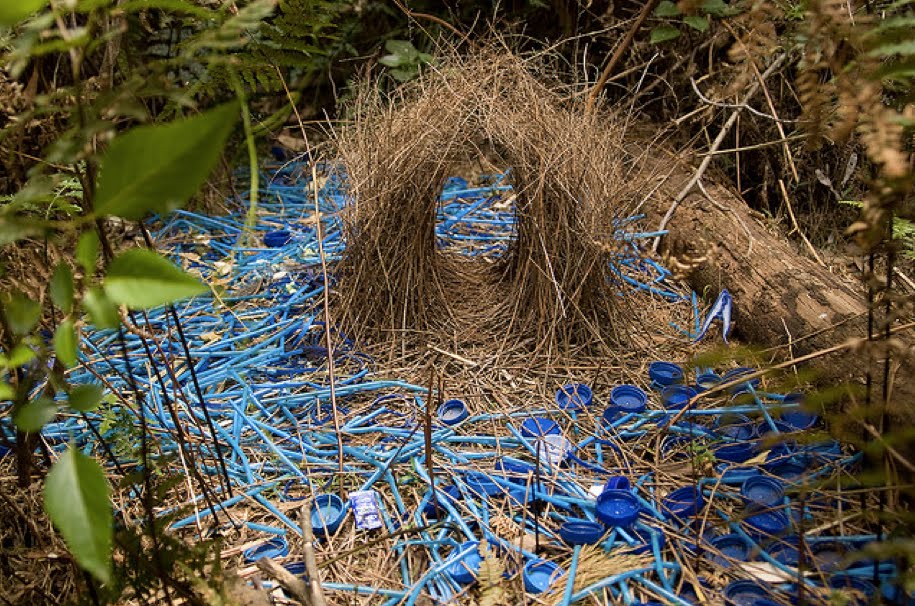 Until the pufferfish first maps out his sculpture on paper or via computer graphics, or when the bowerbirds use differential equations to construct their nests, they’ll never even approach us intelligence-wise. Right? Cool that we get to not only set the standard, but keep changing it as well so as to exclude all that is non-human. But why?
I am over-awed and comforted by my kinship with the little pufferfish creating a work of art the same way I do—from an internal vision, using his physical body. I doubt very much, however, that I could create this or any piece of art with my nose. From that perspective, the pufferfish is quite a bit more talented than I am.

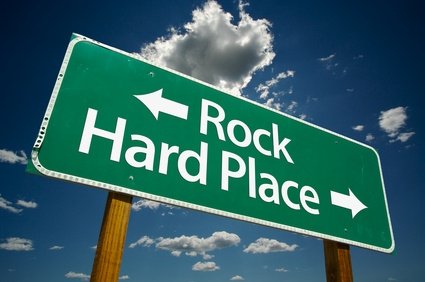
The Law is an Ass
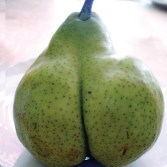 A look into some of the many faces of ‘the’ Law…
Man’s Law
That’s the kind of law which governs the Affordable Care Act, paying taxes, stopping at red lights, having to wait until you’re 21 to drink alcohol, as well as all the penalties accrued and assessed for violations. Man’s Law also includes a majority of ‘God’s Laws’—those governing ethical behavior, e.g. the No Kill Law, the No Stealing Law—those things we all just sort of don’t do, as a rule, but just in case we forget, Moses brought the stone table down from the mountain and made it official.
Man’s Law, at least in the US, excludes any and all rules pertaining to False Gods, Swearing, Keeping Holy the Sabbath, and Honoring Your Parents. Oh, and Coveting—we do all get to covet with complete impunity.
Man’s Law governs and includes all judicial decisions. The way that Man’s Law is an Ass can be understood best in terms of a few recent US Supreme Court decisions, e.g. Kelo v City of New London, 2005, which expanded ‘public good’ to include ‘tax revenue and jobs created by condemning and razing an old lady’s house and building a shopping center.’ Seriously. The government can condemn your property and sell it to a developer.
Citizen’s United v. Federal Election Commisson, 2010. Corporations were given personhood, and therefore the government is prohibited from restricting a corporation’s contribution to political candidates, parties, PACs. Representative government becomes government not of, by, or for the people, but for those with the most bucks. The Monarchy of Money. So much for democracy
Then there’s the Hobby Lobby decision. That’s the one where a company, and presumably a private individual as well, can use a deeply held belief in God’s Law to decide which one of Man’s Laws they don’t have to comply with.
I actually like that one—I can opt out of lots of things on those grounds. Taxes—ain’t gonna pay for war no more.
But, seriously, it’s a whole boxful of Pandoras (a famous saying by former NM Governor Bruce King) that we as a country of 300 million probably don’t really want to let out.
Render unto Caesar?
…that which is Caesar’s and unto God that which is God’s—so says a gospel of Matthew.

And there you have it. Man’s Law is Caesar’s Law—Caesar of course being ‘the government.’ Therefore, the “Render unto Caesar’ rule must extend to keeping its laws. Except when it’s a privately-held corporation with deeply held religious beliefs, and then God’s Law supercedes. Good thing we don’t think God wants us to stone women of other faiths to death, or fly airplanes into tall buildings.
What if obedience to Man’s Law (or God’s Law) causes or allows suffering of others to continue? Should one steal food to feed one’s hungry children or let them starve? Is this God’s will? Should hungry people get away with stealing food?
Deities can be spectacularly subtle
In my ecofantasy novel, Corvus Rising, the Jesuit priest, Alfredo Manzi, struggles with whether to obey Man’s Law and be considered righteous and without blame, or to commit a criminal act that will alleviate the suffering of another. He prays to God, asking for guidance. Does God want us to break laws? Alfredo wonders, but receives no answer.
“Deities can be spectacularly subtle,” Charlie the blue-eyed crow tells the priest. “That’s been the corvid observation of human gods in general over the years.”
“As well as spectacularly unhelpful,” Alfredo said as he drew the outline of the grounds of Rosencranz in the sand. “Sometimes God wants us to find our own way, I guess.”
“Well, it might help if you ask a yes or no question,” Charlie said. “Then the deity could catch a bush on fire, which would be a yes answer I would think. However, silence could also be construed as consent, albeit far less dramatic.” -excerpt from Corvus Rising

In other words, sometimes we’re pretty much on our own.
 Mary C Simmons
You must be logged in to post a comment.