The Little Pufferfish Who Could

…build her a castle

Art in the Sand

B26f7dnIAAAw6YQ
Click on image for extraordinary video: Art of the Pufferfish

Who knew pufferfish are masters of art and architecture?
Or are they merely evoking a mating ritual, in which the sole purpose of the pufferfish’s activity is to impress a female?

Mission Accomplished

On either count. I am impressed. Thoroughly and completely.

I feel a certain kinship to this pufferfish, who pulls his vision from the sand. I work in clay—rarely if not never do I sketch things out first on paper. It’s not that I cannot draw, it’s that paper is but two dimensional, and clay is three. For me, it’s just easier to ‘draw,’ so to speak, with the clay in the first place.

DSCF0224
Archimedes Flight, 2006, Ceramic sculpture by Mary C Simmons

The pufferfish didn’t draw it all out first either, for obvious reasons. No paper, no writing utensils, no thumbs…just an internal vision that drove his entire body in the performance of art. That’s how I do it too, engrossed in my task and operating from an internal vision that informs my hands to construct the compendium of details that comprise the whole.

Art and Sentience

We humans draw a firm boundary between ourselves and the rest of creation, based on a standard (set by us) of intelligence and sentience, which undergoes periodic redefinition to exclude all of creation except us. Originally defined as the ability to feel and perceive, the definition was expanded to include an ability to suffer. Once we started noticing that all animals have that ability, self-awareness became the defining quality of sentience.

I can’t imagine how the pufferfish created his art without an awareness of himself in his oceanic landscape of water and sand. Why is it that the creation of art is an instinctual mating ritual in the animals, but a sign of sentience and intelligence in us?
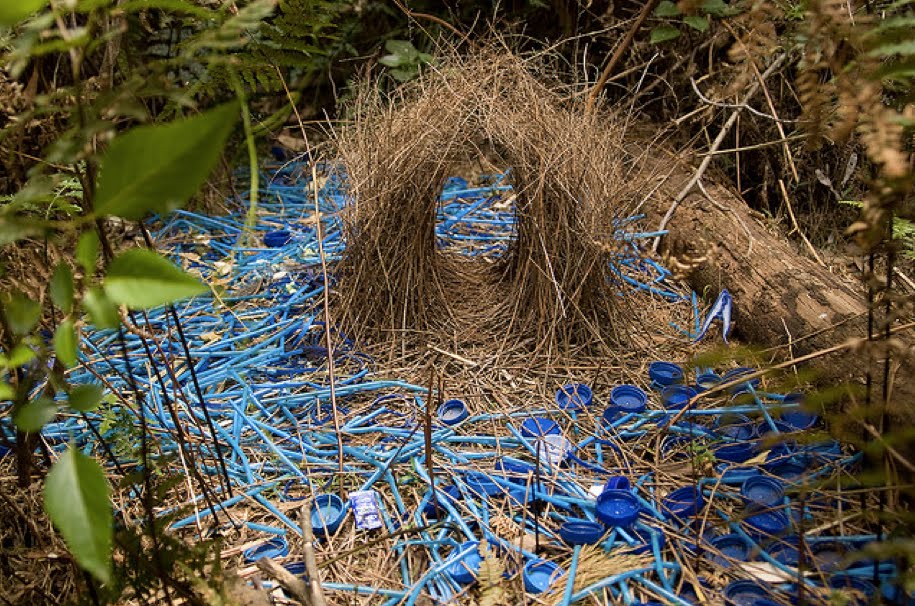
satin-bower-bird-nestUntil the pufferfish first maps out his sculpture on paper or via computer graphics, or when the bowerbirds use differential equations to construct their nests, they’ll never even approach us intelligence-wise. Right? Cool that we get to not only set the standard, but keep changing it as well so as to exclude all that is non-human. But why?

I am over-awed and comforted by my kinship with the little pufferfish creating a work of art the same way I do—from an internal vision, using his physical body. I doubt very much, however, that I could create this or any piece of art with my nose. From that perspective, the pufferfish is quite a bit more talented than I am.

ANIMAL ARCHITECTURE, book out April 2014 087.jpg
Animal Architecture

My Mother, My Art

Rita
Self Portrait, ~1950, Rita M. Simmons

Thanks to my very creative mother, Rita M. Simmons (1921-2004), my childhood was steeped in a variety of creative enterprises and the permission to make messes. She faced it, back in the 1950’s: creativity is untidy. She even organized a neighborhood puppet-making project in our garage that engaged the children of the whole neighborhood.

She painted. I opt for the third dimension. Far and away from my childhood steeped in the odors of oil paint and turpentine, my mother’s paintings inspired me from the hidden places of memory and imagination. I put my hands in clay and evoke the landscape, the dancer, the flowers that grace the Earth. As she, my mother, did before me, on the flat canvasses of her vision.

7
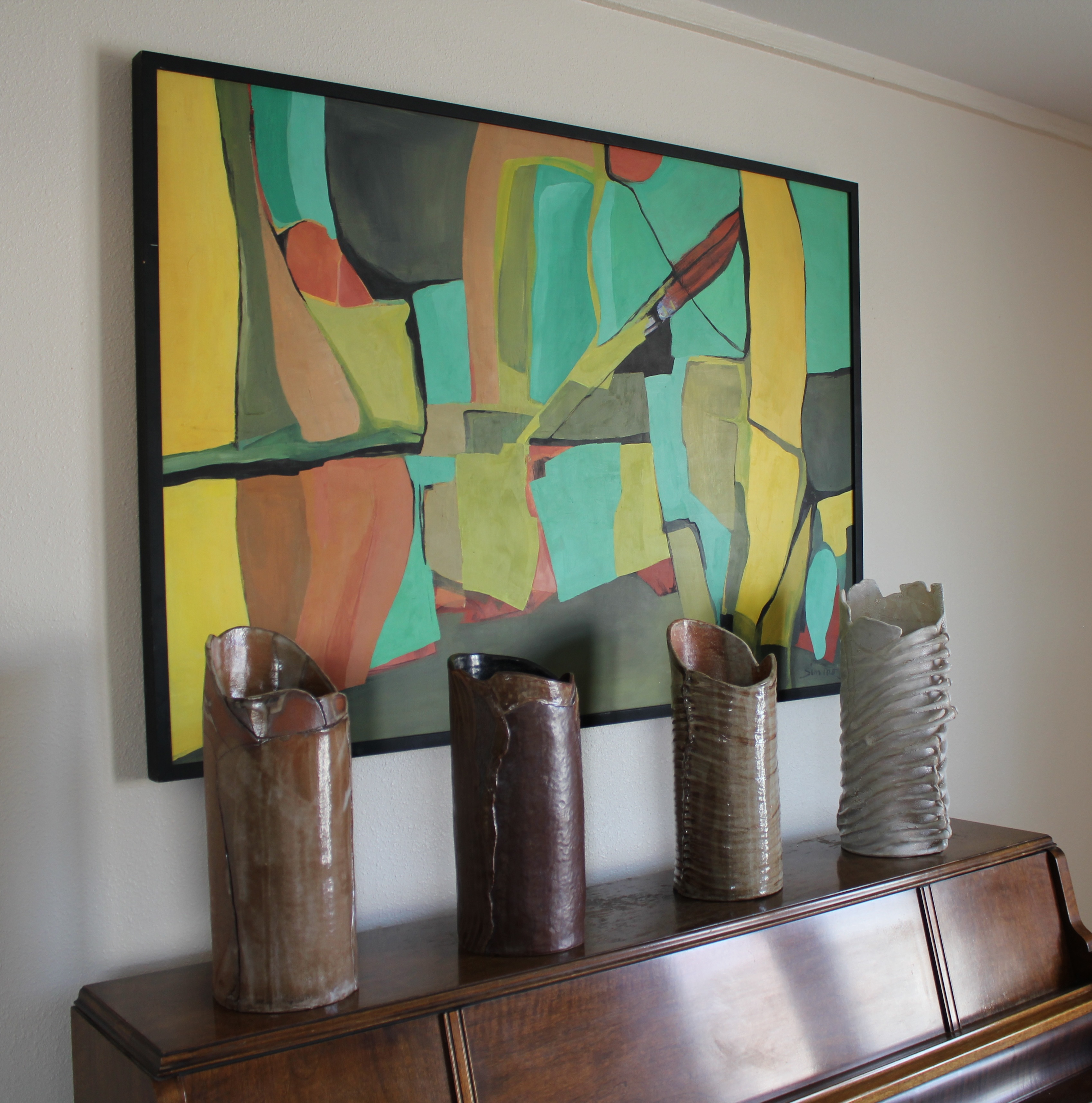
Abstract Landscape, Acrylic, ~1970, Rita M. Simmons; Ceramic Sculpture Cylinders, 2005, Mary C. Simmons

The paintings and ceramic sculptures herein were part of a recent art show at the Church of Art, in Hotchkiss, Colorado.

In 1999, I received a Master of Science degree in geology, which also has exerted a profound influence on my art, both in design inspiration and technique (seeMaking Paint from the Desert Landscape & Bones of Earth, Bones of Clay…)

1
Ceramic Sculpture Cylinders, 2005, Mary C. Simmons

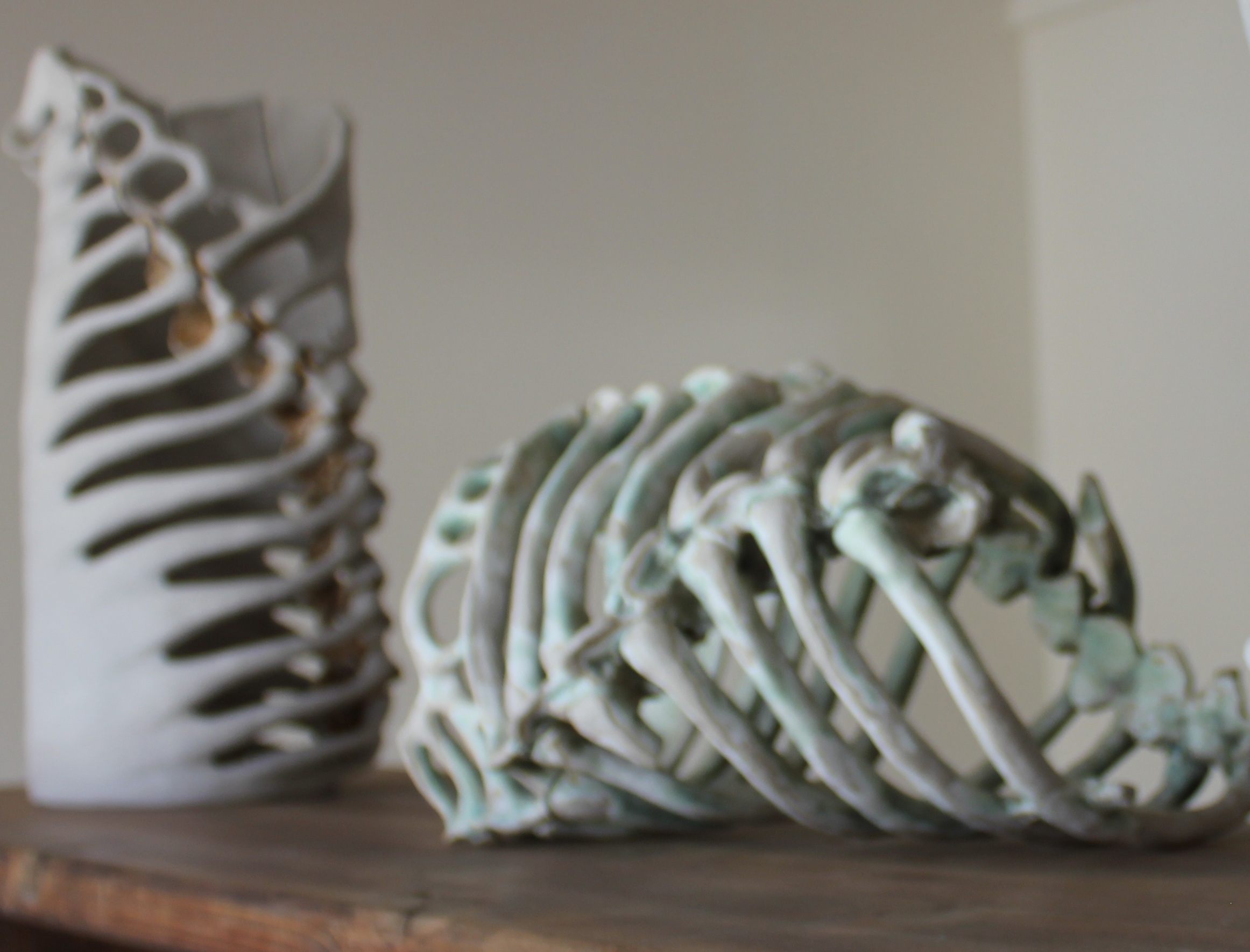
I taught geology for 4 years in Indiana, and spent the summers in dry New Mexico, where the Cylinder Series happened, 22 of them, comprised of high-fired stoneware and porcelain.

3
Skeletal Cylinders, 2005, Mary C. Simmons
Platter1
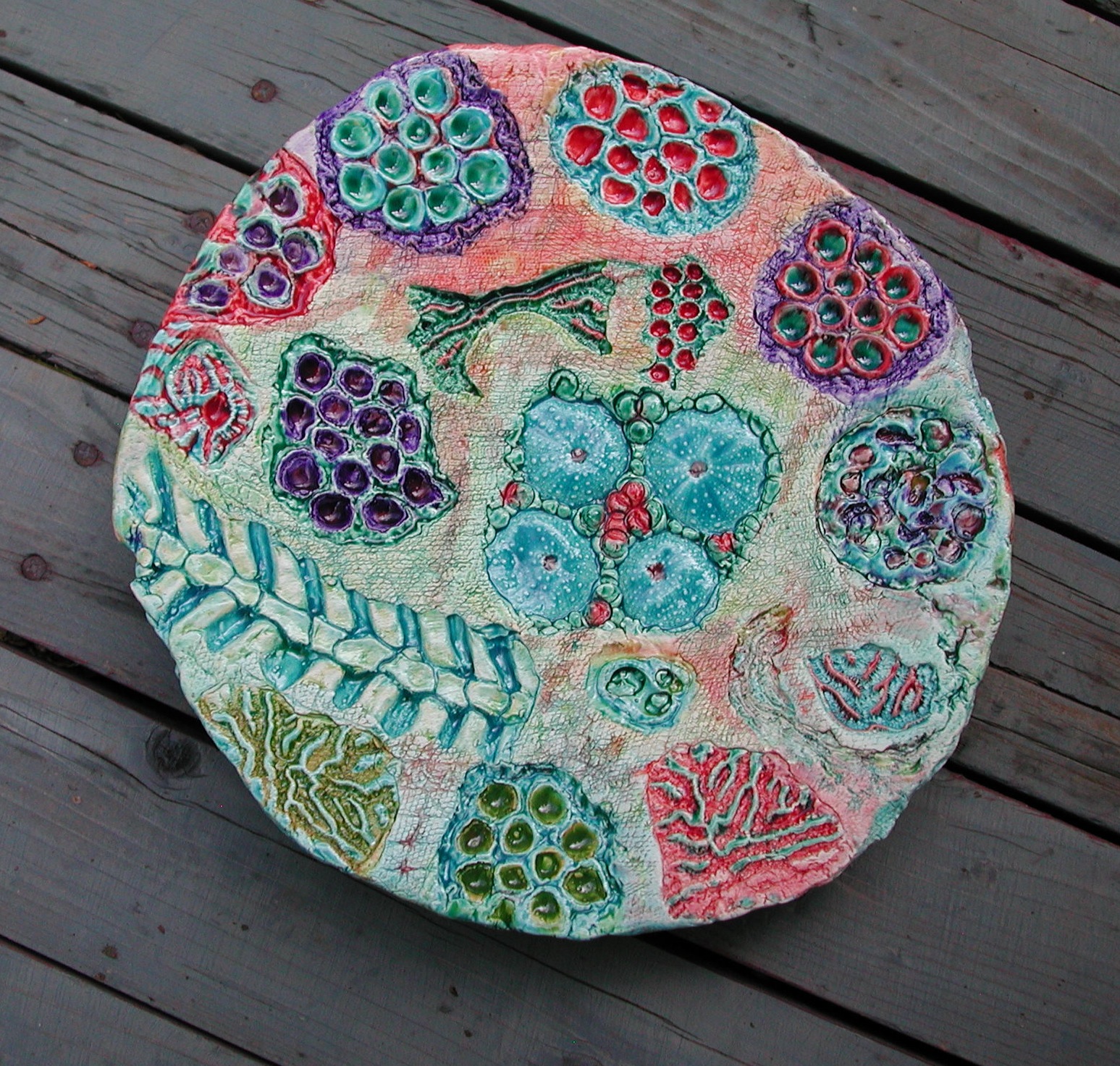
Textured Platter, 2014, Mary C. Simmons

My latest passion in ceramic art: bright, beautiful colors and intricate textures in low-fired earthenware clay.

2
Textured Bowls, 2014, Mary C. Simmons

At last, I am painting. Like my mother, who by her example, made my life an open space for art.

Thanks, Mom.

Rocking the Paint

Making Paint From the Rocks

I can easily IFlose myself in Earth’s landscapes, especially the rocky ones. The textures and colors tell a story of chemistry, weathering and erosion. And, if providing a scenic backdrop to my life is not enough, with these rocks I make pottery and glazes.

And paint.

The color palette is generally limited to oxides of iron: brown, reddish-brown, tan, yellowish tan, greenish tan–e.g. Earth colors.

Occasionally a little copper shows up, coloring the clay softly green or blue. Pottery glaze colors depend on these denizens of the Periodic Table. And so did paint, once upon a time before IKB.

I started with several gallon-size zip-lock bags of reddish, greenish and one highly yellow clay. The colors are the result of a certain degree of iron oxidation, and finely ground turquoise, which is a copper mineral.

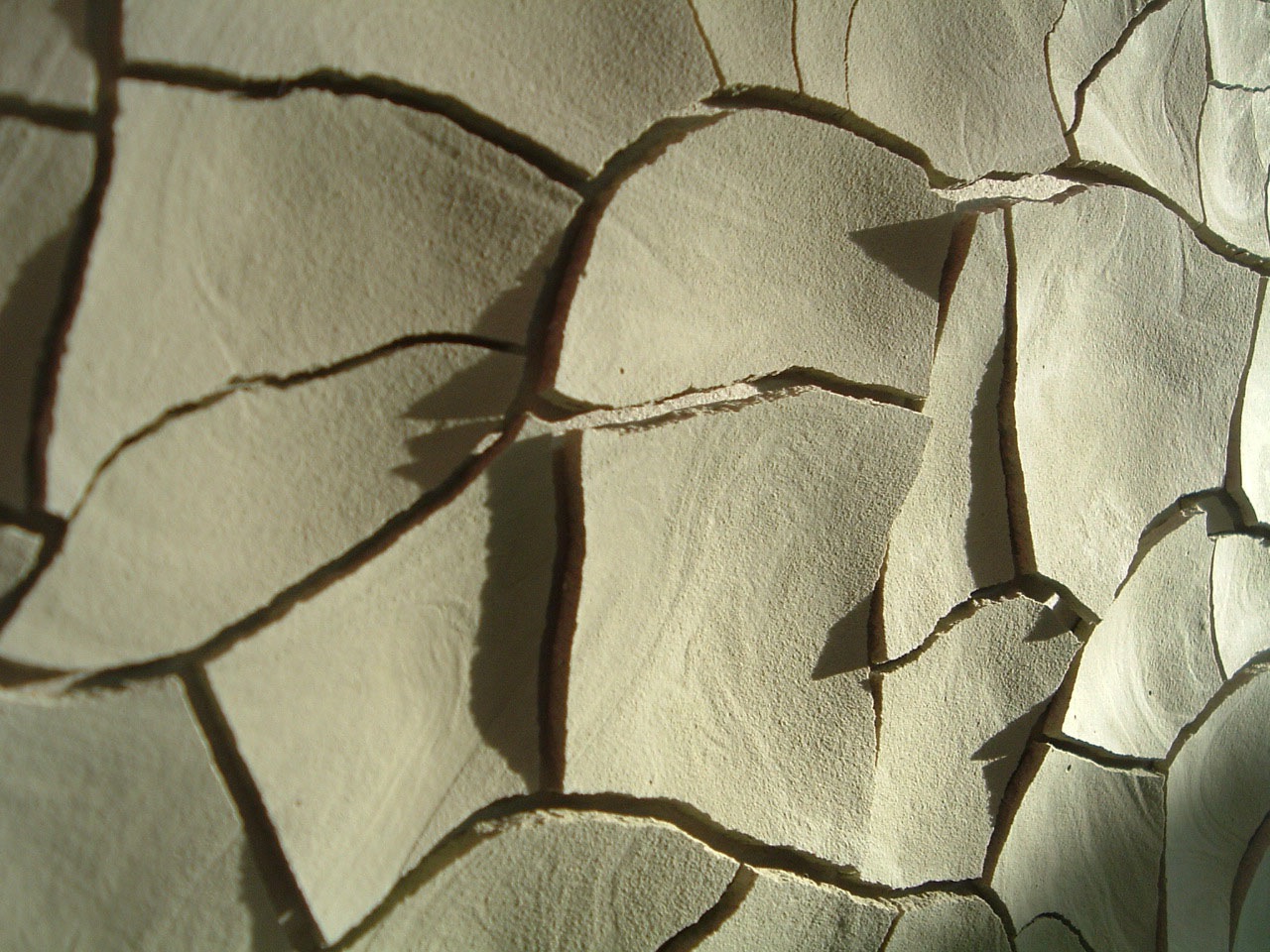
I sifted out all the rocks, twigs, animal bones and other detritus, and let the colored clay settle in large jars of water. After siphoning off the excess water, I poured this clay slurry onto large pieces of gypsum board to dry. The mud cracks were amazing art pieces in themselves.

CuMudHLimonitePM

Painting with Clay

After the clay slurry completely dried, I crushed and sieved each into a fine powder. I added a little linseed oil to the colored clay powder and in a frenzy of inspiration, I painted

The Paintings

SandiaSunset2 What else can I say? Inspired by rocks, enchanted by Earth’s landscape…

Follow this link to Desert Paintings…http://wp.me/P3Fsq9-in