Corvus Rising – Synopsis

Adobe Photoshop PDF

Corvus Rising is a fantasy tale told in part from the point of view of crows, about an extraordinary yet nearly extinct group of humans who speak their language, known from antiquity as “the Patua’ “. Together, humans, crows, ravens, and a multitude of other birds, unite and take a stand against the destruction of an enchanted island.

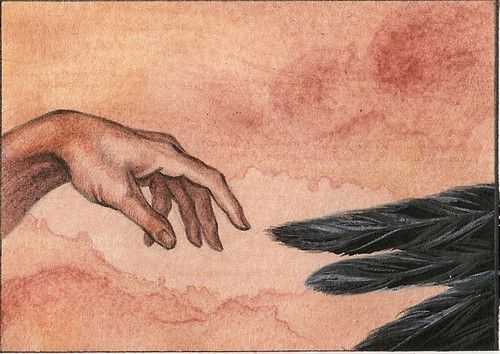
The story opens as Jade Matthews, a gifted painter with a vivid imagination, awakens from a nightmare in which a band of crows has broken into her bedroom through a large window. She fears that the crows are looking for her most treasured possession: a strange medallion given to her by the mother she never knew. The medallion seems ancient, carved from stone or a very hard wood, depicting a human hand and a bird wing clasped in friendship.

Jade’s husband Russ is a biology professor at the local university, as is the Jesuit priest and noted ornithologist, Alfredo Manzi. The priest serendipitously discovers the enchanted Wilder Island, home to an unusual population of blue-eyed crows and ravens. He meets Charlie, patriarch of the great Hozey clan–one of the many old families of crows on the island, known to them as Cadeña-l’jadia–land of misty marshes and green forests.

Manzi learns that he is not a freak, that there are others like him, others who speak Patua’. Charlie tells Manzi about his old friend Charlotte, trapped in an insane asylum for years because she does not speak human languages, though she is fluent in Patua’.

But there is more to the island than blue-eyed crows. Manzi discovers a rustic chapel built by the man for whom the island was named; an old hermit, coincidentally a Jesuit brother of the 1800’s named Maxmillian Wilder. The chapel completely charms Manzi, built from living trees and vines, with a roof that resembles an upside-down bird’s nest. He finds the old hermit’s bones in the chapel, and a strange medallion carved from a very hard wood or stone, with the image of an intertwined wing and a human hand.

Coincidentally, with Manzi’s discovery of Wilder Island, his superior, the Father Provincial of the North American Society of Jesus in Washington DC, learns that the Order owns the tiny uninhabited Wilder Island, located in the middle of one of America’s biggest rivers.

With the Father Superior’s blessing, Manzi makes the island his home, just in time to stave off the advances of the developer who plans to build a gambling resort on the island. Turned down by the Jesuits to purchase the property, the developer turns to a condemnation lawsuit under US eminent domain laws, recently expanded to allow for public use to include commercial development.

The threat to the island is dire. With the financial backing of the Father Superior, a tree-hugging attorney named Kate designs a land trust-the Friends of Wilder Island, to defend it and deflect the developer’s condemnation suit. Manzi invites his colleague Russ Matthews and his artist wife Jade, and his helper Sam Howard to join the land trust, and they name it Friends of Wilder Island.

Manzi risks exposing his strange ability to speak with crows to other humans–a secret he has kept hidden his entire life, as he tries to unite them against the destruction of a unique wilderness.

While the humans argue over the merits of wilderness preservation and economic development, Charlie the blue-eyed crow and the Great Corvid Council take matters into their own wings. Fanning out in all directions, the crows and ravens gather a multitude of birds of all feathers to take a stand and defend Cadeña-l’jadia, ancestral homeland to the great Hozey clan, and the beloved Bruthamax, the old Jesuit hermit who came to the island a century ago.

So… what’s a Corvus?

Say what?
Say what?

Short answer: crows and ravens are members of the genus Corvus.
Long answer: <click here…>

Oh, by the way…

Corvus Rising is available as a paperback, and at the Amazon Kindle Store. <right here>

The Great Corvid Council – Excerpt from Corvus Rising

angels-among-us-gothic-and-crows-art-photography

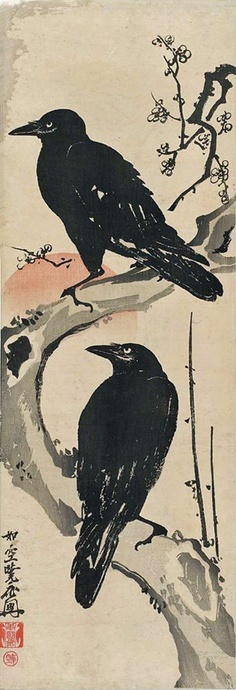
Imagine perching in the trees above a group of crows and ravens engaged in a heated discussion.
‘It’s the Great Corvid Council!” I might say to you. ”
Look!” you might say, “there’s a human, too!”

A Patua’, in fact—a human who speaks the language of the crows. Known to the corvids as Jayzu, he’s a Jesuit priest named Alfredo Manzi, and he is meeting the Council for the first time.

There are sanctuaries, and then there are Sanctuaries

Alfredo stepped out from behind the trees and walked into the very surprised group of corvids. “I am honored to be among you,” he said quietly to the hushed councilors.

Many of them nodded to one another, mumbling their approval. A few waved a wing at him, and others called out their greetings and comments. “Yo! Jayzu!” “That’s a Patua’?” “He looks just like a regular human!”

Hookbeak, the Aviar of the Council spoke, “And we are honored you came to us, Jayzu. Greetings!”

Alfredo held his hands out as a few of the councilors stepped forward to greet him.

“We were gladdened by the news of a Patua’ on Cadeña-l’jadia,” a raven said cordially. “I am Longshanks. Welcome.” He brushed his wing across Alfredo’s hand.

“Is it true, Jayzu,” a crow spoke out above the muttering, “you are building a birdsanctuary on Cadeña-l’jadia?”

“Not yet,” Alfredo replied, “but someday I—”

“Sanctuary? What kind of sanctuary?” one of the ravens interrupted in mild alarm. He wandered through the councilors on the grass as he spoke. “There are sanctuaries and then there are Sanctuaries, so we wonder exactly what you intend to do in this sanctuary. Some oddball sanctification ritual perhaps? Will you require feathers? Entrails?”

“No,” Alfredo said, “I—”

“Sanctuary?” a few of the councilors said as they looked at one another in apparent confusion.

“What’s a sanctuary?” asked a crow.

“It just means—” Alfredo started to say.

“Sanctuary—the word comes from the root, to sanctify,” another crow replied sanctimoniously. “To mortify and cleanse the flesh.”

Alfredo felt exasperated with some of the councilors, but there was little he could do other than wait politely and grab what chance he could to speak. He glanced at Hookbeak, standing silently next to him on the grass. Will he not intervene and let me talk?

“Ah,” the raven who had asked the original question said. “It is a bathing place then. In this case, for birds. That does not sound so bad.”

“Unless the cleansing of the flesh is done with blood, Restarea,” a raven said. Hoots of denial circulated through the Council. “It has happened,” he continued. “Human use of animals as sacrificial offerings for ritual ceremonies to appease their gods is well known.”

“Will this Patua’, this Jayzu, be experimenting on birds in his sanctuary?” another raven asked. “Perhaps feather plucking for his rituals? Dissection?”

There will be no sacri—” Alfredo said and glanced at Hookbeak standing silently next to him on the grass. Will he not intervene and let me talk?

“A sanctuary is a refuge, Walldrug,” Starfire said, impatiently waving a wing. “Safe haven. Rest stop. Now please, let us remember that Jayzu is Patua’. I daresay he reveres the corvid as much as Bruthamax did.”

“Charlie of the great Hozey Clan,” a crow said, “well, his wife told my wife that he told her that Jayzu knew nothing of Bruthamax.”

Gasps of incredulous dismay pulsed through the councilors, and they looked at one another and Alfredo in disbelief. “Never heard of Bruthamax? How can that be?” someone hissed. “He knows not his own kin!” whispered another. “How can we trust him?”

Bedlam broke out as factions lined up against other factions. “Interventionist!” one side cried out, while the other shouted “Isolationist!”

“Are you all daft?” Starfire shouted, striding to the middle of the two groups. “Or just deaf? Did you not all just find it remarkable that there was a Patua’ among us? Remember thinking the Patua’ had completely vanished? Shocking as it is, Bruthamax is not known among humans outside of the city surrounding us.”

The councilors quieted down as Starfire spoke. By the time he finished, dignity had been restored. A few seconds of silence reigned, and Alfredo seized the moment.

“That is true.” He paused, momentarily shocked that no one interrupted. “Human knowledge of the Patua’ is significantly less than yours. I am Patua’ yet knew not there were others of my kind.”

Thirteen pairs of eyes, some black, some blue, stared back in silence. “I did not know of Bruthamax until I came to Cadeña-l’jadia,” Alfredo continued, grateful for the opportunity to continue speaking. “Since then, I have learned much, thanks to the corvids for keeping his stories and sharing them with me. I am proud to be counted among Bruthamax’s kin.”

Most of the councilors softened and some even had a few sympathetic words of comfort: “Any kin of Bruthamax is a friend of ours!” “Long live the Patua’!” “Long live Jayzu!”

An explosive sound nearby scattered the councilors, and someone shouted, “Meeting adjourned!”

Alfredo was suddenly alone with Hookbeak and Starfire in the small clearing. He waited for a few minutes for the Aviar to speak, but the old raven kept silent and still as stone, listening. Not a creature stirred. Even the insects had been silenced.

“Thank the Great Orb for that explosion,” Starfire said at last. “Nothing scatters the corvids like the sound of gunfire. Otherwise we would be beaking this to death till sunset.”

“I thought it was just a car backfire,” Alfredo said.

“It was,” Hookbeak said. “But no matter, we accomplished what we wanted today.”

“We did?” Alfredo said.

“Yes,” the Aviar replied and leaped into the sky.

“Indeed, Jayzu,” Starfire said. “Thank you.” He flapped his wings and took off after Hookbeak.

“For what?” Alfredo called out after the ravens as they flew away. “What did we accomplish?”

But the ravens were gone and he was alone, but for several black feathers that lay on the grass, twitching in the breeze.

∞∞∞

Insofar as corvids are very much like us, I imagine their Council might resemble our Congress—a group of bickering factions that peck irrelevant minutiae to death without accomplishing much. Perhaps I corvopomorphise

Perhaps not, given the history of our relationship with these birds…in any case, Corvus Rising is a fantasy….an Ecofantasy of mine that we could all be Patua’…

Hand

 About Corvus Rising, and where to get it

….click here.CorvusRisingCover2

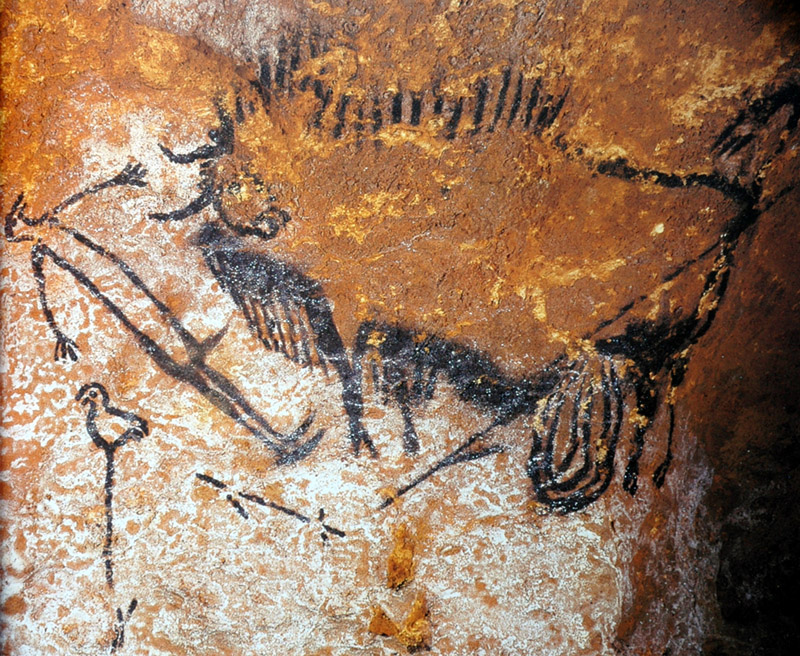
First Crow, First Raven, First Human: Tan Me Hide and Teach Me to Sew


df6c072e1fe5a5ce7fc590df721af24c

First Crow and First Raven had gained a vast storehouse of learned experience in the eons they flew the skies of Earth, well before the first human took a bite of the first apple from the Tree of Knowledge. In the beginning, Raven especially got a big kick out of tricking these silly gullible creatures. They believed anything he said.
“Look! Over yonder, on the horizon! It is the Great Spirit!” Raven would call out and point with one wing. When the humans looked away, Raven swooped down upon them and stole their food. Time after time.

Crow and Raven grew quite fat; they lacked nothing due in large part not to Raven’s trickery, but also because humans were so astonishing wasteful.

“They wouldn’t have to work so hard at hunting and gathering if they didn’t waste so much food.” Crow beaked an eyeball from the severed head of a Big Hairy Beast and swallowed it in one gulp. “They leave so much on the ground for us, which I for one am dreadfully grateful, but if they were more efficient, their food would go further, and they would not have to struggle so to get more.”

“Don’t let them hear you say that!” Raven said, shushing Crow with his wings. He never could leave well enough alone, could not resist wanting to be helpful to these pitiful creatures.

“You see Cousin, in a perfect world, the amount of time we Corvid should spend obtaining food needs to be inversely proportional to the time humans do. That is my famous Inverse Proportionality Rule governing work. Remember? Let’s say they work twice as hard as they have to, which translates into us doing half the work we have. Eh, Cousin?”
Crow’s beady black eyes glazed over, and Raven knew his cousin was only barely listening. But he also needed to remind Crow that his interference in human affairs nearly always backfired. “In other words, dear Cousin,” he said, shaking Crow out of his daydreams of rescue and assistance, “the more they hunt and gather, the less we have to. If they start slacking off, we’ll have to find our own food. No, Cousin. Their wastefulness is our largesse. Think about it. And shut up, please. For the good of us all.”
Crow had always tried to be helpful to the foolish humans. For instance, after they’d hunted and killed the Big Hairy Beast, he had suggested they skin it.
“Why?” the Chieftain asked. “The skin is no good to eat. Too much fur. It is tough and hard to swallow. Even the dogs won’t eat it.”
“No,” Crow said, shaking his head. “You must skin the Beast before you cook him so that you can use his fur to keep yourselves warm.”
The humans stared at Crow, slack-jawed. They hadn’t thought of that; the fire in the spit always burned most of the hair off. They ate the meat, and threw the burnt hide back into the fire.
Crow taught the humans how to carefully slice through the hide up the Big Hairy Beast’s big belly and down the underside of its limbs. The humans learned how to scrape the inside of the hide with a rock, and Crow taught them to boil down the Big Hairy Beast’s brain, which would produce the preservative that would keep the hide from rotting or falling apart.

“You want the biggest pieces of hide you can get,” Crow told them. “Stitching a lot of small pieces together would be very labor-intensive.

“Stitching?” the Chieftain asked, scratching his aching head. “What is stitching?”
“You make needles from his bones, and laces from strips of his hide,” Crow instructed the humans exhaustively and in a day or so, they had managed to not only make a few bone needles, but to thread them as well with long thin strips of Big Hairy Beast hide.
“Now,” Crow said, nodding as the humans finished poking a line of holes through the edges of the hide, “you can attach pieces of hide together, just make sure the holes line up.”
He picked up a threaded needle in his beak and jammed the pointy end into the holes through the two layers of hide. The humans broke into a surprised outcry when they saw him reach underneath the hide and pull the needle through. After poking the needle in one side and out the other a few more times, Crow stood back and said, “And that, my friends, is stitching.”
The humans were sore amazed, but were also clever and deft with their hands, and they stitched together every piece of hide they could find. Soon the whole tribe had fur cloaks, and Crow was very happy to see them all warm and toasty.
To show their gratitude to Crow for bringing the gift of sewing, the humans gave him the head of the very same Big Hairy Beast whose hide they all wore. Crow lugged the head back to the tree in short flights punctuated with a drop to the ground to rest a few moments; the head was heavy and made it hard to fly very far. He dropped the hunk at the bottom of the tree Raven, who didn’t care as much for the company of humans as did his Cousin.
“Cousin,”Raven said after they’d feasted on Beast head, “I have to thank you for the tanning lessons you gave them.”
“Why, thank you! It is good to see the poor things fending off the cold,” Crow said, ever hopeful that compassion had awakened in his cousin’s heart.
“Yes, well that too, I reckon,” Raven replied as he picked small bits of flesh from his feathers. “But the stench of burning Big Hairy Beast hair made me gag.”
And so the great partnership of humans and Corvus continued. As the years went by, Crow and Raven taught the naked and ignorant humans everything they needed to know to survive on Earth.