
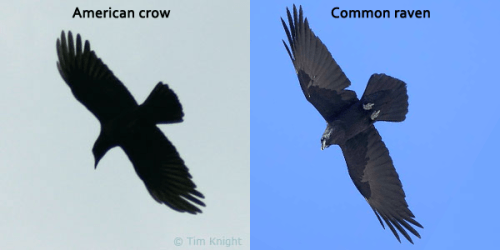
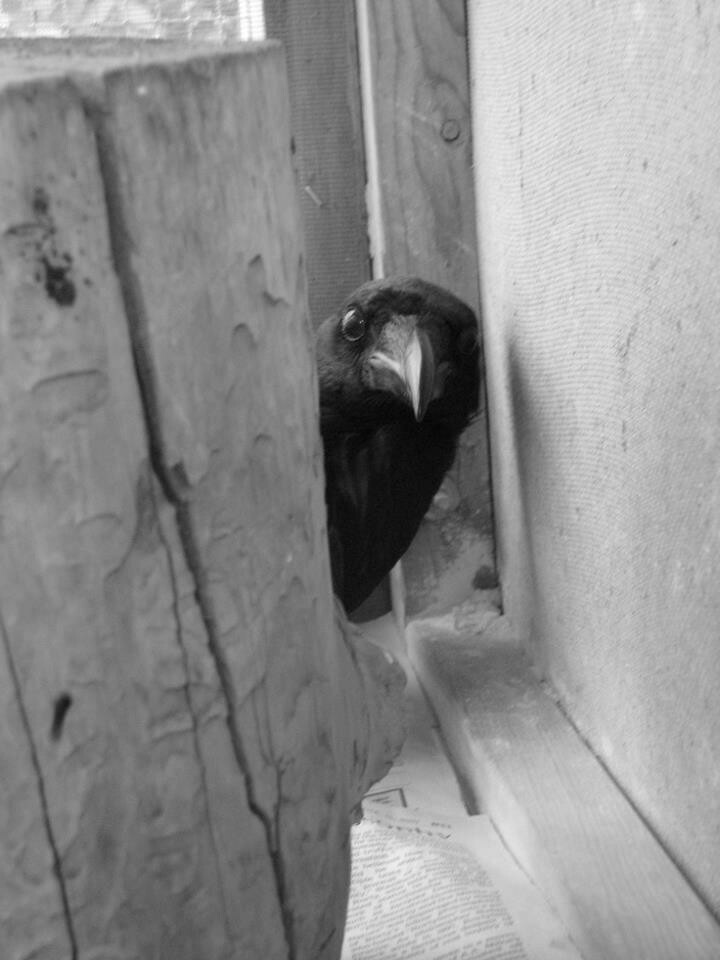
The short answer: crows and ravens are members of the genus Corvus.
Bird people refer to them as corvids, because they belong to the family Corvidae, as do magpies, jays, rooks, nutcrackers, jackdaws and a few others.
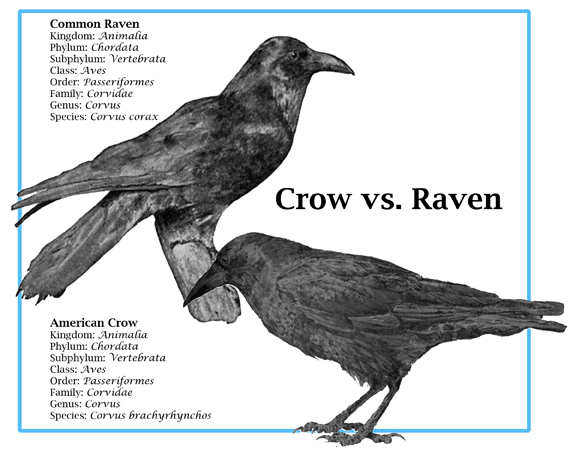
Of the corvids, only crows and ravens roost under the genus Corvus. Many species of crows and ravens fly the blue skies of Earth, but in the U.S., it’s all about the American Crow (Corvus brachyrhynchos) and the Common Ravens (Corvus corax).
Raven or Crow?
Though they look a lot alike, crows and ravens are not of the same species, therefore they don’t mate.
Generally ravens are bigger than crows, but unless they’re hanging out together, which they do sometimes, it’s hard to tell them apart by size. Their beaks and tails are distinctive. Raven beaks are thicker and curvier than crow beaks, and their tails are wedge-shaped, as opposed to a more ‘blunt cut’ of the crow tail.

Corvid Speech
Raven speech sounds different than crow speech. I prefer ‘speech’ to ‘calls’, because I believe they are conversing, though we don’t hear most of what they’re saying. So does Michael Westerfield, by the way, noted corvid researcher and author of Language of Crows.
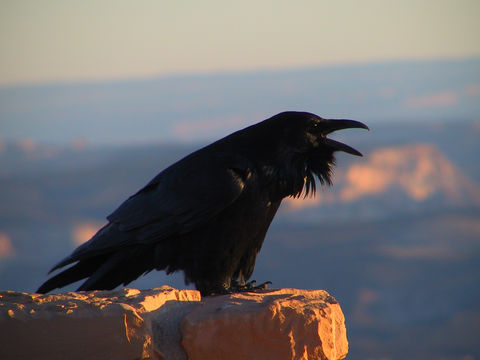
Raven speech sounds more like a croaking trill. (http://www.shades-of-night.com/aviary/sounds/raven1.wav)
 Crow speech to us sounds like a series of ‘caw’ sounds. (http://www.shades-of-night.com/aviary/sounds/crow2.wav)
- AmericanCrow
(Corvus brachyrhynchos)

We Go Way Back…
Corvus is one of the oldest constellations in human history and resides within a group of constellations, the Crater, Hydra, and Sextans. In the Greek myth, Apollo flung the disobedient Corvus into the night sky in a fit of rage, where the thirsty Corvus gazed forever at the Crater–a two-handled cup full of water, guarded by the water snake Hydra. (Sextans is not part of this myth). (http://ow.ly/mBwtb)
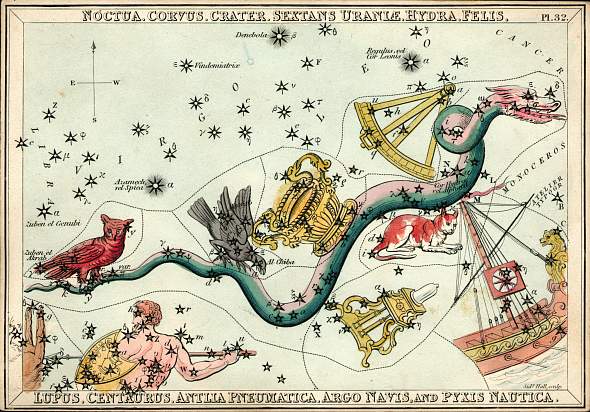

The elements of the story have become obscure, but the age of the story–Aesop told it–illustrates the antiquity of the Human/Corvus relationship. Revered and reviled by gods and mortals, we are not the boss of them.


 Mary C Simmons ... Art and Word
You must be logged in to post a comment.