About me…

The Judas Crow

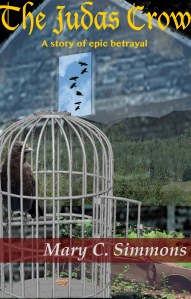
The newspaper article below inspired my new short story, The Judas Crow. It’s a rather ghastly account of humans using an animal for sport killing of its own kind.

JudasCrow_copyI imagined what might be like to be inside the mind of the Judas Crow—having no idea about Judas or Jesus or betrayal on a scale it seems only our species is capable.

In The Judas Crow, a ‘small human’—do crows recognize our small ones as our children? do they recognize gender?—nurses an injured crow back to health, brings him food and water, and encourages him to fly again.

The Judas Crow spends many days in a cage, longing for the freedom of the skies and to be re-united with what is left of his family. He wills his broken wing to fly again, never imagining for a moment the act of betrayal he is being tricked and enticed into.

The scoundrel!

Judas was Not a Crow

What exactly would the title “Judas Crow” mean to the crow? Guilt at delivering one’s own kin to their deaths? —a human invention that ought to apply to crows as well as to humans?

It wasn’t easy, this mind-meld with a species not my own. But we know from scientific research that crows perceive, feel, form bonds with one another, and grieve at the death of a loved one, so we have at least this kinship with them.

I wonder what do we look like to them? Do they think we are intelligent? Or sentient? Care about our fellow humans? Do they see the carnage we humans enact upon other humans and yet do not eat them? Moments after death, all animals are meat. Are they astonished at this waste?—what other reason would one kill another animal, if not for its meat?

Who is the scoundrel here? The Judas Crow, or the humans who created him?

It’s in the eye of the beholder, I reckon. But perhaps we should take another lesson from the animal world.  You kill to eat, to go on living.

Not just for the hell of it.
JudasCrowCover2

Zentangle!

Zentangle1Zentangle, a technique of doodling that requires a steady hand more than anything. And concentration— which somehow makes it relaxing. Really.

That’s why it’s called Zen-tangle. Almost meditative, Zentangle shuts out the world and flatlines the nagging cortisol-producing thoughts that our brains seem to be addicted to like candy. All the while you’re making a piece of art.

Zentangle3

Pick up a pen. Just do it.

Zentangle7

Bread of Life, Bread of Art

DSCN6431

Tis the Season!

…for bread baking.
And time for another short course on Sourdough Bread Baking at the Creamery Arts Center in Hotchkiss, Colorado. Each of will us feed a cup of hungry microbes—a.k.a. Sourdough Starter, while I ply you all with buttered slices of this freshly baked at the Creamery, slathered with a local jam, all the while regaling you with True Microbe Stories.

And, how to make and bake it.

Artisan Bread

That’s what they call it now, the bread of our ancestors. It’s a very simple recipe: flour, starter, water and a little salt. This is bread you can live on. A form of lactic acid fermentation (think: yogurt, kefir, sauerkraut, kimchee…) sourdough starters ferment the grain in the dough, usually wheat, into more digestible food for us, and *BONUS* food for the good microbes that inhabit our guts and keep us healthy.

And, sourdough starters generate their own yeast, so you don’t have to add any. None. Zip. Nada. But you do need to let the dough rise for a much longer time than is needed for breads that use store-bought yeast. Eighteen hours is good. But sometimes the dough rises faster than that, so you just gotta bake it.

The granulated yeast in the packets and brown jars at the grocery store makes a passable bread–totally tastier than the mass-produced breads from commercial bakeries. But it is not as fabulous, nor is it evidently as nutritious to the human body as the wild yeast breads, aka those produced with sourdough starters.

As it turns out, sourdough starters are a microbial mixture of lactic-acid and alcoholic fermentation. Yeast microbes are alcohol fermentaters, and we need them to make the bread rise. Yeasty breads smell heavenly in the baking, but without the lactic acid fermentaters, the bread falls short in flavor. I’ll never go back to commercial yeast.

For the DIYers:

You can easily grow a starter yourself, comprising yeast microbes, which cause the bread to rise, along with three or so others that make the aforementioned very tasty bread. For more info on how to start and feed a starter (it’s easy, really!), go here: http://www.scientificpsychic.com/alpha/food/sourdough-bread.html.

Check out the link at the end about lactic acid fermentation, and Who’s Who in your starter, and what they eat, how they eat it. The beasties: yeast and lactobacillus…remember the fad some years ago, where Sweet Acidophilus Milk was readily available at major grocery stores? It was a good idea. A great idea.

Wonder why they stopped.

Lacotbacilli are not just good, not just great, they are essential to our health.


figure-1“Life without Lactobacilli is unimaginable”

Lactobacillus is a large family of rod-shaped microbes; several varieties reside in common foods we regularly eat, such as beer, wine, yogurt, sauerkraut, pickles, kimchi, and of course, CHOCOLATE! It’s the Lactobacillus sanfransiscus, the First Citizen of sourdough starters, that makes the bread fantastic. Yep, named after the famed Sourdough Bread of San Fransisco.

Mmmmm….microbes….how lucky we are to have them in our midst.

I love the microbes in my starter. I can’t see them, but I see evidence of them. The starter almost doubles in volume soon after feeding, as the microbes discharge CO2 while mawing down on the grain and sugars. I hear the CO2 bubbles snap and crackle as they pop. It makes me smile.

My little pretties.

BreadBowl3
Sourdough Bread Bowl with Winter Squash Soup